
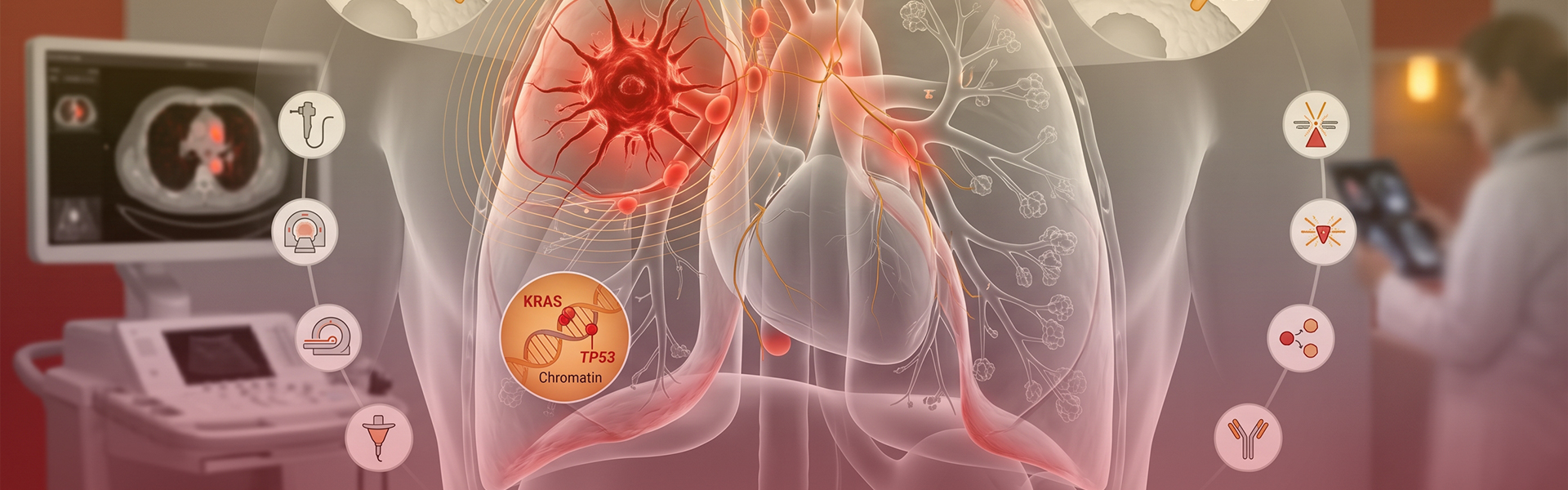
Cancer of the lungs, oesophagus, and chest. Expert care at KD Cancer Centre
Lung cancer is the leading cause of cancer death in Indian men. Despite this, many patients are diagnosed at an advanced stage because early lung cancer causes no symptoms. In India, tobacco smoking (bidi, cigarette) and increasingly, exposure to air pollution and indoor cooking smoke from biomass fuels, are major risk factors affecting non-smokers too, especially women.
Abnormal cell growth in the lungs.
Two main types
If you have a persistent cough, breathlessness, or unexplained weight loss, please see a doctor, even if you have never smoked.
Affects the food pipe, carrying food and liquids to the stomach. Risk factors include tobacco, alcohol, chronic acid reflux (GERD), and hot beverages.
Rare cancers affecting the thymus gland and surrounding tissues in the chest.
Affects the lining of the lungs. Asbestos exposure may affect construction and industrial workers.
See a doctor immediately if you have any of these symptoms lasting more than 2 weeks
Lung cancer often has NO symptoms until it is advanced. High-risk individuals (smokers aged 50+) should discuss low-dose CT lung screening with their doctor.
Indian and Asian patients with lung cancer, especially non-smokers, have a higher rate of certain gene mutations (such as EGFR) that can be targeted with specific oral medications (tyrosine kinase inhibitors). These drugs can be highly effective with fewer side effects than traditional chemotherapy. Molecular testing of the tumour sample is an important part of treatment planning at KD Cancer Centre.

Yes. In India, many lung cancer cases occur in non-smokers due to air pollution, indoor smoke, second-hand smoke, and genetic factors.
Common symptoms include persistent cough, breathlessness, chest pain, unexplained weight loss, difficulty swallowing, and hoarseness.
People at high risk, especially smokers or ex-smokers aged 50 years and above, should consult a doctor about low-dose CT screening.
Yes. Many thoracic cancers are treatable, especially when detected early. Outcomes depend on the stage and type of cancer.
Treatment may include surgery, chemotherapy, radiation therapy, targeted therapy, and immunotherapy, often used in combination.
Early detection increases the chances of successful treatment, reduces complications, and improves overall survival and quality of life.
© KD Cancer Centre. All Rights Reserved.