
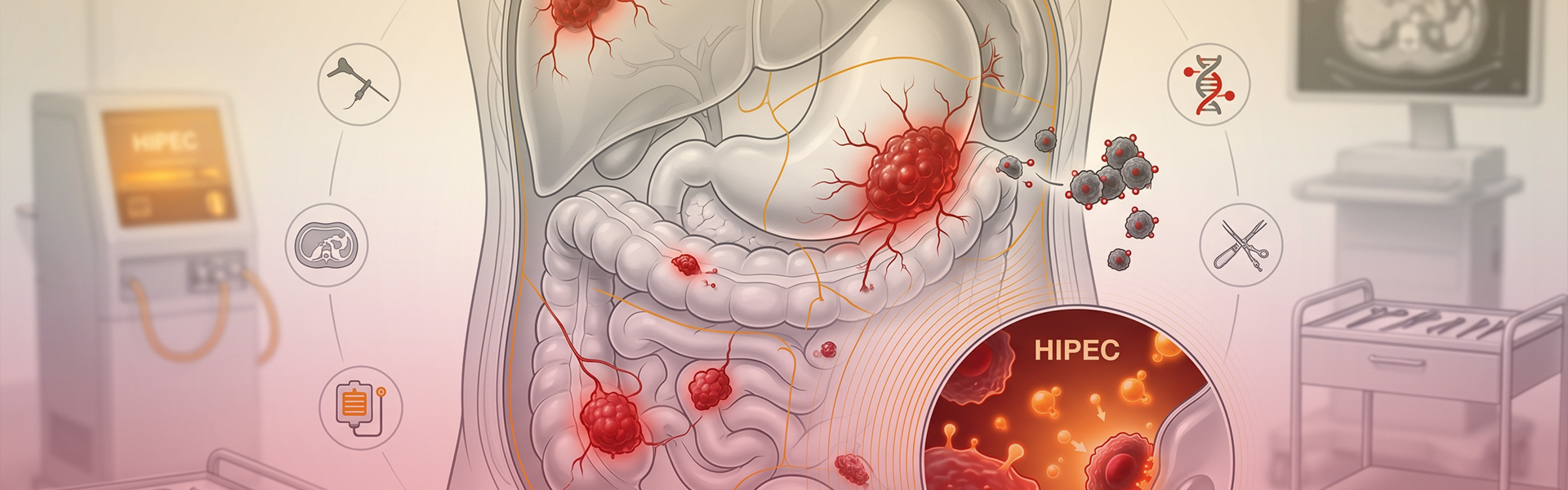
The peritoneum is a thin layer of tissue that lines the inside of the abdomen and covers most of the abdominal organs, including the stomach, intestines, and liver. Think of it as an internal protective lining of the abdomen. When cancer spreads to this lining, it is known as peritoneal carcinomatosis or peritoneal surface malignancy. While serious, specialised treatment can significantly extend life and improve quality of life.
These are cancers that occur within the peritoneal cavity, the space between the abdominal organs and the abdominal lining. They may
Peritoneal surface tumours may not cause noticeable symptoms in the early stages. However, signs to watch for include
This is a complex surgical procedure performed to remove all visible tumour deposits from the abdominal cavity. The procedure is performed by experienced surgical oncologists in specialised centres. The aim is to remove as much visible disease as possible.
HIPEC is given immediately after CRS while the patient remains in the operating theatre. A warm, concentrated chemotherapy solution is circulated through the abdominal cavity for 60–90 minutes.
Benefits include
Understanding the process can reduce anxiety and help you prepare.
Evaluation: CT scan, PET scan, and clinical assessment to determine suitability
Preoperative preparation: Bowel preparation, nutritional optimisation, and anaesthetic review
Surgery (CRS): Removal of visible tumour deposits (4–10 hours depending on extent)
HIPEC: Heated chemotherapy circulated in the abdomen for 60–90 minutes under anaesthesia
ICU and recovery: Usually 1–3 days in ICU, followed by 7–10 days in the ward
Recovery at home: 4–6 weeks of gradual recovery with follow-up appointments
This is a major procedure available only at specialised centres. KD Cancer Centre is among the few centres in Gujarat to offer CRS + HIPEC with a dedicated multidisciplinary team.
PIPAC delivers aerosolised (mist-form) chemotherapy directly into the abdominal cavity during keyhole (laparoscopic) surgery. The chemotherapy is sprayed under pressure, allowing deeper penetration at lower doses, which may reduce side effects.
These are highly specialised procedures and may not be suitable for all patients with peritoneal disease. The extent of disease (measured by the Peritoneal Cancer Index (PCI)), the type of primary cancer, and the patient’s overall fitness are carefully assessed before recommending treatment.
Our team will explain all options honestly, including whether other approaches such as PIPAC or systemic chemotherapy may be more appropriate.

Some patients may achieve long-term control or remission with specialised treatment. Outcomes depend on the type of cancer, extent of spread, and overall health.
CRS is a surgery to remove visible tumours. HIPEC is heated chemotherapy given immediately afterwards to destroy microscopic cancer cells.
Most patients need several weeks for recovery. Hospital stay is usually 1–2 weeks, followed by gradual improvement at home over 4–6 weeks.
HIPEC is given while the patient is under anaesthesia during surgery, so no pain is felt during the procedure.
PIPAC may be considered for patients with recurrent, advanced, or inoperable peritoneal disease who are not suitable for major surgery.
Yes. In suitable patients, these treatments may reduce symptoms, slow disease progression, and improve quality of life.
Yes. KD Cancer Centre is among the specialised centres in Gujarat offering CRS + HIPEC with an experienced team.
If you have persistent abdominal pain, bloating, unexplained weight loss, or altered bowel habits, consult a specialist promptly.
© KD Cancer Centre. All Rights Reserved.