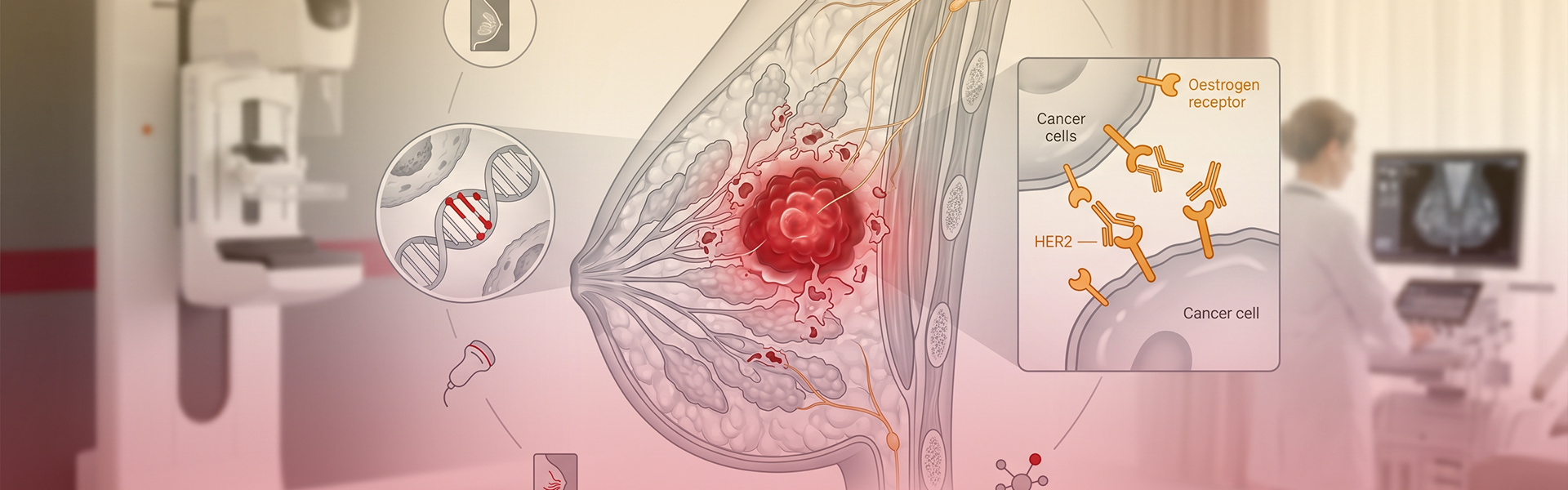
Understanding, detecting, and treating breast cancer with compassion
27
%
All cancers in Indian women are breast cancer
1 in 22
Urban Indian women will develop breast cancer
1 in 60
Rural Indian women will develop breast cancer
50 - 64
Peak age of diagnosis in India (years)
Source: ICMR – National Cancer Registry Programme (NCRP), CancerIndia.org, Peer-reviewed studies (PMC)
Breaking the silence: It's okay to talk about breast cancer
In India, many women delay seeking help due to social stigma, family concerns, or fear. Breast cancer is not shameful; it is a medical condition. Being open about your symptoms, whether with a doctor or a loved one, could make a life-saving difference. At KD Cancer Centre, every conversation is completely confidential and handled with the utmost sensitivity.
What is breast cancer?
Breast cancer begins with abnormal cell growth in breast tissue. While most common in women, it can also affect men, as everyone has breast tissue. Thanks to early detection and advanced treatments, survival rates are improving, and mortality rates are declining.
The most important message: Breast cancer detected early is highly treatable. Stage I breast cancer has a survival rate above 90%.
Causes and risk factors
- Genetic and family history (BRCA1 and BRCA2 mutations)
- Late marriage and first pregnancy after age 30 increases risk
- Not breastfeeding: Breastfeeding for at least 6 months is protective
- Lifestyle factors: smoking, alcohol, obesity, and physical inactivity
- Age: Higher risk in women above 50
- Not breastfeeding (breastfeeding is protective)
- Environmental factors: radiation exposure
Risk factors particularly relevant for Indian women
- Dense breast tissue: More common in Indian women, can make mammogram reading harder. Discuss with your doctor
- Rapid urbanisation: Changed diet (more processed food, less physical activity) is increasing breast cancer rates in Indian cities
- Hormone therapy for menopause: Discuss risks carefully with your doctor
Signs and symptoms
See your doctor immediately if you notice any of the following:
- A lump or thickening in the breast or underarm
- Changes in breast size, shape, or skin texture
- Redness, dimpling (like orange peel), or puckering of breast skin
- Nipple discharge (especially bloodstained), inversion, or pain
- Persistent pain or swelling in the breast
Do not wait, see a doctor if
Any breast lump or change lasting more than 2 weeks must be evaluated. Many women in India wait months before seeing a doctor due to fear or embarrassment. This delay can allow cancer to advance to a harder-to-treat stage. A 10-minute consultation can make a life-saving difference.
Importance of early detection
1. Self-examination guide
Perform a monthly self-examination to check for lumps, skin changes, and abnormalities
- Stand in front of a mirror and look for any changes in shape or skin
- Raise your arms and look again
- Lie down and use your fingertips to feel the entire breast in a circular motion.
- Check the armpit area as well
- Best time: 3–5 days after your period ends
2. Advanced screening and diagnosis
- Mammography and breast ultrasound (recommended annually after age 40)
- Guided core needle biopsy
- Indian women often have denser breast tissue, which can make mammograms harder to read. If your mammogram report says 'dense breasts', ask your doctor whether an ultrasound or MRI is also recommended for you.
Treatment options
Surgery
- Breast-conserving surgery (lumpectomy): Tumour removal preserving the breast
- Oncoplastic surgery: Cancer removal with aesthetic reconstruction
- Sentinel lymph node biopsy: Minimally invasive assessment of cancer spread
- Axillary lymph node dissection
- Mastectomy (complete breast removal): When clinically necessary
- Robotic-assisted breast cancer surgery: Precision-driven, minimally invasive
Medical treatments
- Chemotherapy: Before or after surgery to shrink or eliminate cancer cells
- Radiation therapy: After surgery to destroy any remaining cancer cells
- Targeted therapy: Attacks specific receptors on cancer cells (e.g., HER2-positive cancers)
- Hormonal therapy: For hormone-sensitive cancers, it blocks cancer-promoting hormones
- Immunotherapy: Helps the immune system fight cancer
Reconstructive and rehabilitative surgery
- Breast reconstruction (autologous and implant-based) after mastectomy
- Axillary reverse mapping to preserve lymphatic drainage
- LYMPHA: Prevents lymphoedema after lymph node removal
- Lymphoedema management: Reduces arm swelling post-surgery
- Chronic pain management after mastectomy
Insurance and financial support
Breast cancer treatment is covered under many health insurance plans. Plan your treatment with confidence. Consult our patient support team for financial support options and cashless facilities.