
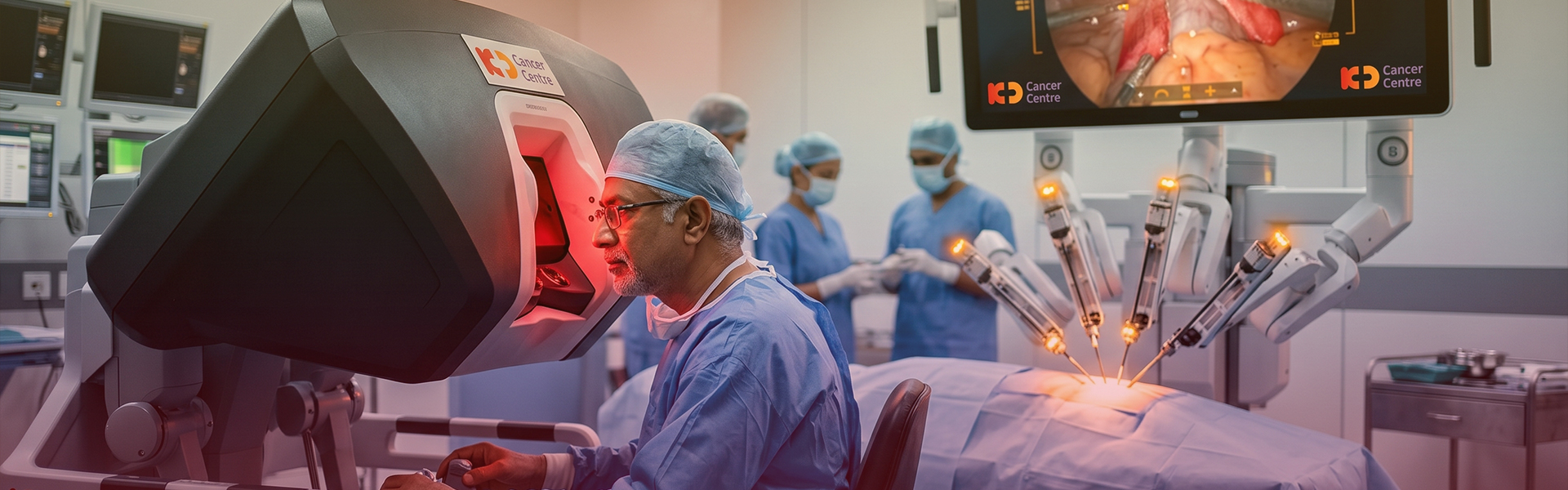
Robotic surgery does NOT mean a robot operates on you independently. Your surgeon controls every movement from a console. The 'robotic arms' are small instruments attached to a machine that the surgeon guides with their hands. Greater precision and flexibility allow surgeons to operate accurately in tight spaces, resulting in less damage, less pain, and faster recovery.
Incisions = less scarring
Blood loss during surgery
Hospital stay
Return to daily life
Robotic hysterectomy for uterine cancer and sentinel lymph node biopsy (SLNB)

Yes. Robotic surgery is performed by the same experienced surgeon using advanced tools. The robotic system enhances the surgeon's capabilities — it does not replace their skill or judgment. KD Cancer Centre's robotic surgery team has extensive training and experience.
No. Robotic surgery uses small incisions, so scars are usually minimal and heal better compared to open surgery.
Yes, most patients experience quicker recovery, less pain, and can return to daily activities sooner than with traditional surgery.
Not always. Suitability depends on the type, stage, and location of cancer. Your doctor will recommend the best approach for you.
No. The surgeon is in full control at all times. The robotic system simply assists by enhancing precision and movement.
Usually not. Most patients have a shorter hospital stay compared to open surgery, depending on the procedure.
Pain is generally less compared to traditional surgery due to smaller cuts and minimal tissue damage.
In many cases, yes. Robotic surgery is associated with less bleeding, lower risk of infection, and fewer complications.
Yes, many elderly patients benefit from robotic surgery due to faster recovery and fewer complications, if they are medically fit.
Yes. Regular follow-ups are important to monitor recovery and ensure the best outcomes.
A detailed consultation with your surgeon, along with necessary tests, will help determine if robotic surgery is the best option for your condition.
Robotic surgery may have a higher initial cost, but the shorter hospital stay and faster recovery often offset this. Ask our billing team for a clear cost breakdown and insurance guidance before your surgery.
Not everyone is a candidate for robotic surgery. Our team will advise you on whether it is the best option for your specific case.
© KD Cancer Centre. All Rights Reserved.