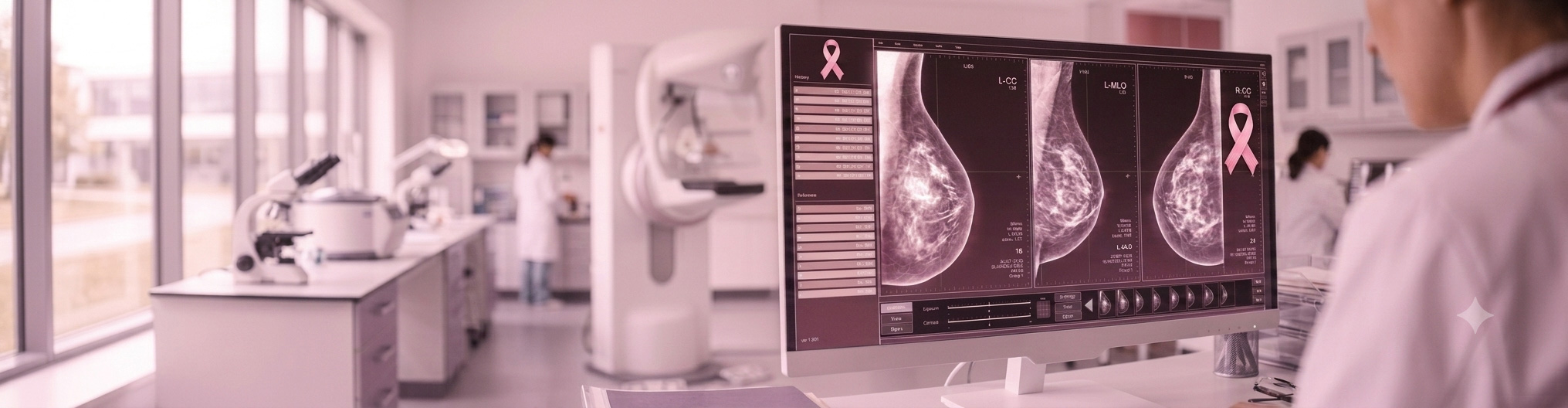
Breast cancer is the most common cancer among Indian women, and yet most women here are still being diagnosed later than they should be, after the disease has already advanced, when treatment gets harder, and outcomes get worse. That gap is what our Breast Clinic exists to close.
Finding it early, treating it precisely, and supporting you through all of it, not just the parts that show up on a scan.
Why Early Detection Matters So Much
A few numbers explain why we push so hard on early detection:
- About 1.6 lakh new breast cancer cases are diagnosed in India every year
- More than 60% of Indian women are diagnosed at an advanced stage, Stage III or IV
- Caught at Stage I, survival is above 95%. Caught at Stage IV, it drops below 30%
- Indian women tend to have denser breast tissue, which can make lumps harder to spot on a standard mammogram alone
That last point is worth remembering: a normal mammogram doesn't always tell the whole story, which is part of why we often combine it with an ultrasound.
About Breast Health
The breast is made up of glandular tissue that produces milk, the ducts that carry it, fatty tissue, and lymph nodes. Most lumps turn out to be harmless. But because breast cancer is so treatable when it's caught early, any new or unexplained change is worth having a specialist look at, rather than waiting to see if it goes away.
Conditions We Treat
- Breast cancer: Early stage, locally advanced, and metastatic
- Benign lumps: Fibroadenomas, cysts, fat necrosis
- Breast pain, both cycle-related and unrelated
- Breast infections and abscesses
- Nipple discharge, especially if it's spontaneous or bloodstained
- High-risk conditions, including BRCA1/2 gene carriers and other risk factors that call for closer monitoring
- Male breast cancer and gynaecomastia
Warning Signs
Even if your last mammogram was normal, any of the following is worth getting checked rather than watching and waiting:
- A lump in the breast or armpit, painful or not
- A change in the size or shape of a breast
- Skin dimpling or puckering, sometimes described as looking like orange peel
- A nipple that has newly turned inward
- Discharge from a single duct, especially if bloodstained or unprompted
- Redness, warmth, or thickened skin on the breast; this can be a less obvious but urgent form of breast cancer that doesn't present as a lump
- Breast pain that stays in one spot and doesn't ease with your cycle, lasting more than three weeks
- A new lump in the armpit, even without one in the breast
Screening: What We Recommend
Cancer found through screening, before symptoms appear, is almost always treated less aggressively and with better outcomes than cancer found afterwards. As a general guide:
- Ages 25–39: An annual clinical breast exam and general awareness of what's normal for you
- Ages 40–49: Annual mammography, with ultrasound added if your breast tissue is dense
- Ages 50–74: Mammography every year or two, depending on your doctor's advice
- Dense breasts: Mammogram plus ultrasound, sometimes with an additional imaging option
- BRCA1/2 carriers: Annual MRI and mammography starting around age 25–30
- Family history: Start screening about ten years before the age your relative was diagnosed, and
consider BRCA testing
Diagnosis
Depending on what we find, diagnosis may involve:
Digital mammography
- Breast ultrasound, especially important alongside mammography for denser breast tissue
- Breast MRI, for a clearer picture in complex or high-risk cases
- A needle or vacuum-assisted biopsy to sample the tissue directly
- Sentinel lymph node biopsy, to check the lymph nodes without removing them all
- Genomic tests that can show whether chemotherapy is actually likely to help, sparing many early-stage patients from unnecessary treatment
- BRCA1/2 genetic testing, recommended for younger triple-negative patients and anyone with a strong family history
How We Treat Breast Cancer
Surgery remains central to treatment, and we lean toward approaches that preserve the breast whenever it's safe to do so; breast-conserving surgery followed by radiation works as well as mastectomy for many patients, and oncoplastic techniques help maintain a natural shape. When mastectomy is needed, we plan reconstruction as part of the process from day one, not as an afterthought, using implants or the body's own tissue
Beyond surgery, treatment is guided by what type of breast cancer you have at a molecular level; some respond well to hormone therapy alone, others need chemotherapy, and HER2-positive or triple-negative cancers have their own newer, more targeted drug options. Radiation is typically used after breast-conserving surgery, and sometimes after mastectomy too, depending on the size and spread of the cancer.
Fertility: A Conversation Worth Having Early
If you haven't finished building your family and you're facing a breast cancer diagnosis, fertility preservation is worth discussing before treatment starts, not after. Options include freezing eggs or embryos, often possible within about two weeks of diagnosis and medication that can help protect the ovaries during chemotherapy. It's a conversation we try to start early, because timing matters.
Life After Treatment
Recovery continues well past the last treatment session. Our survivorship care includes:
- Preventing and treating lymphoedema, with exercises and compression support
- Managing menopausal symptoms that can follow treatment
- Monitoring bone health, since some hormone therapies can weaken bones over time
- Heart health monitoring for patients who received certain chemotherapy drugs
- Support for body image, intimacy, and emotional well-being
- Practical guidance on diet and exercise to help lower the chance of recurrence
When You Should See a Breast Specialist
- Any new lump in the breast or armpit, even after a normal mammogram
- A family history of breast or ovarian cancer
- Known BRCA1/2 carrier status
- An abnormal mammogram, ultrasound or MRI, even one marked 'probably benign'
- Any change in the skin or nipple
- No mammogram in the last two years, if you're 40 or older
- Breast pain that's localised, persistent, and unrelated to your cycle